


Clinical research in healthcare focuses on studying diseases, treatments, and patient outcomes to improve medical knowledge and care quality. It includes clinical trials, data analysis, and evidence-based studies that help develop safer and more effective treatments.
What Exactly is Clinical Research in Healthcare?
Clinical research in healthcare is a branch of medical science that studies how diseases develop, how treatments work, and how patient outcomes can be improved. It plays a major role in developing safe and effective medications, medical devices, diagnostic tools, and treatment methods used in human healthcare.
This field helps doctors and scientists understand whether a treatment is safe, how well it works, and what side effects it may cause. Clinical research in healthcare is essential for improving modern medicine, advancing healthcare innovation, and supporting evidence-based treatment decisions.
Clinical research in healthcare includes studies focused on prevention, diagnosis, treatment, and symptom management of various diseases. It ensures that new medical approaches are tested carefully before being widely used on patients.
Types of Clinical Research in Healthcare
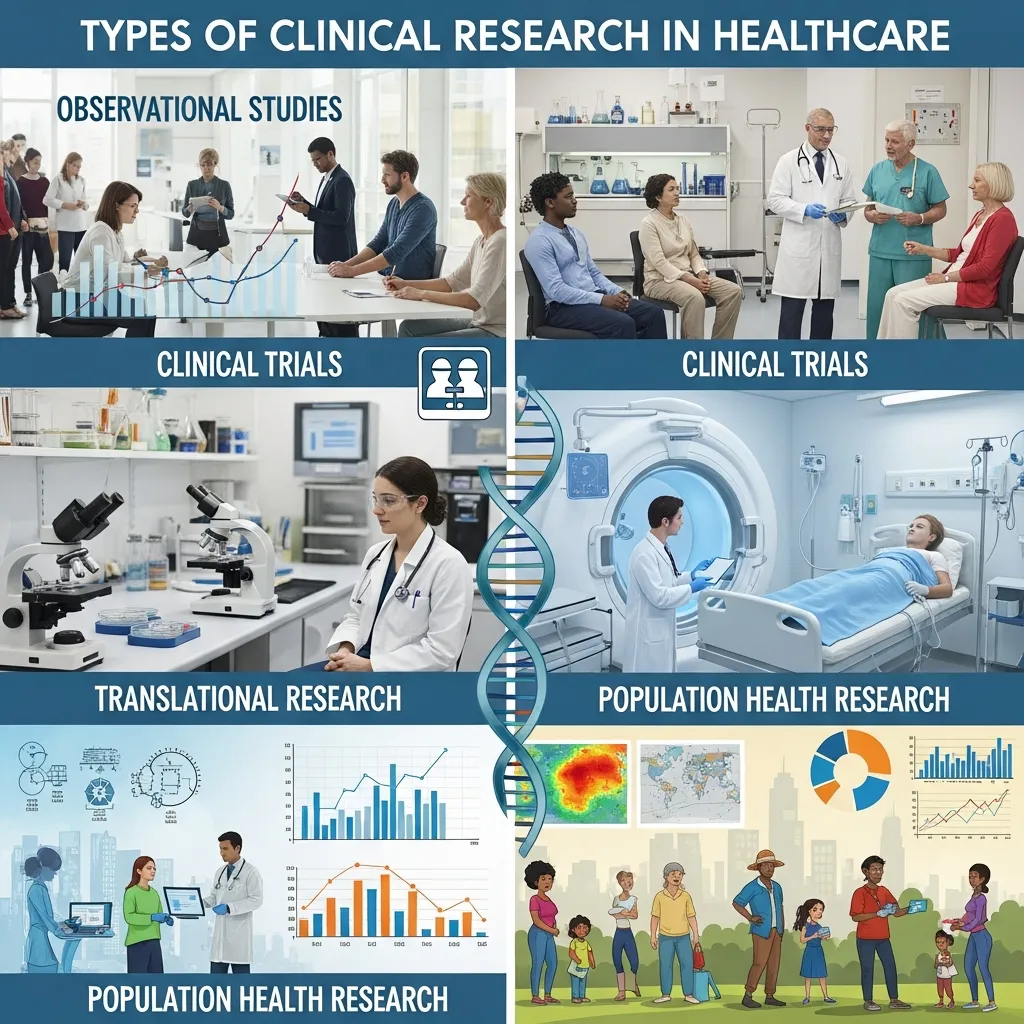 There are different types of clinical research in healthcare, and each one serves a specific purpose in medical advancement. The two main categories are observational studies and clinical trials.
Observational Studies in Clinical Research in Healthcare
In observational studies, researchers monitor patients in real-life conditions without changing their treatment or environment. They collect data over time to understand how diseases progress and what factors influence health outcomes.
This type of clinical research in healthcare is useful for identifying risk factors, lifestyle impacts, and long-term health trends. For example, researchers may study how diet, exercise, or environmental exposure affects heart disease or diabetes.
Clinical Trials in Clinical Research in Healthcare
Clinical trials are a more structured form of clinical research in healthcare where researchers actively test new treatments or interventions. Participants are assigned to specific groups to evaluate how different therapies work compared to standard care.
These trials may involve new medicines, surgical procedures, vaccines, or behavioral therapies. The goal of clinical research in healthcare through clinical trials is to determine safety, effectiveness, and potential side effects before a treatment becomes widely available.
Importance of Clinical Research in Healthcare
Clinical research in healthcare is essential for medical progress and patient safety. It helps develop new treatments, improve existing therapies, and provide scientific evidence for medical decisions.
Without clinical research in healthcare, modern medicine would not be able to evolve or adapt to new diseases and health challenges. It also plays a key role in improving survival rates, reducing complications, and enhancing quality of life for patients worldwide.
How Clinical Research in Healthcare Improves Treatment
One of the main goals of clinical research in healthcare is to improve how diseases are treated. By testing new drugs and therapies, researchers can find better and safer options for patients.
It also helps doctors make informed decisions based on scientific evidence rather than assumptions. This ensures that patients receive treatments that are proven to work effectively.
Future of Clinical Research in Healthcare
The future of clinical research in healthcare is becoming more advanced with the use of technology such as artificial intelligence, big data analysis, and digital health tools. These innovations are making research faster, more accurate, and more accessible.
As clinical research in healthcare continues to grow, it will play an even bigger role in personalized medicine, where treatments are tailored to individual patient needs.
The Phases of Clinical Trials
When testing a new drug or treatment, researchers follow a strict, multi-phase process. Each phase serves a specific purpose and builds upon the data collected in the previous one.
Phase I: Researchers test a new treatment on a small group of healthy volunteers (usually 20 to 80 people). The primary goal is to assess safety, determine a safe dosage range, and identify side effects.
Phase II: The treatment is given to a larger group of people (100 to 300) who have the disease or condition the product is designed to treat. This phase further evaluates safety while beginning to measure effectiveness.
Phase III: This phase involves a much larger group of patients (often 1,000 to 3,000 or more) across multiple clinical sites. Researchers compare the new treatment to the current standard of care. Successful completion of this phase typically leads to regulatory approval. You can read more about how the FDA evaluates new drugs during this stage.
Phase IV: Also known as post-marketing surveillance, this phase occurs after the treatment has been approved and is available to the public. Researchers continue to track its safety and effectiveness in the general population over a longer period.
The Impact of Clinical Research in Healthcare
 The importance of clinical research cannot be overstated. It is the engine that drives medical progress. Every over-the-counter painkiller, cancer therapy, and vaccine available today went through rigorous clinical testing.
Advancing Medical Treatments
Clinical studies provide the scientific evidence needed to introduce new therapies. By systematically testing interventions, researchers can definitively say whether a new drug works better than a placebo or an existing treatment. This evidence-based approach removes guesswork from medicine. It allows doctors to prescribe treatments with confidence, knowing they are backed by solid data.
Improving Patient Outcomes
Ultimately, the goal of all healthcare initiatives is to improve patient outcomes. Clinical trials often give patients access to cutting-edge treatments before they are widely available. This is especially vital for individuals with severe or rare conditions that do not respond to standard therapies. Furthermore, the knowledge gained from clinical studies helps refine medical guidelines, ensuring that healthcare providers worldwide adopt the most effective practices. For deeper insights into our internal medical data processes, check out our resource on koro.
Ethical Considerations and Patient Safety
Protecting the rights, safety, and well-being of trial participants is paramount. History has shown that without strict ethical guidelines, research subjects can be exploited. Today, rigorous frameworks govern how clinical studies are conducted.
Informed Consent
Informed consent is a foundational ethical requirement in clinical research. Before joining a study, potential participants must be given all the information they need to make a voluntary decision. This includes the study’s purpose, duration, required procedures, potential risks, and expected benefits.
The consent process is not a one-time event. It is an ongoing conversation between the research team and the participant. If new information emerges during the study that might affect a participant’s willingness to continue, researchers must disclose it immediately.
Regulatory Oversight
Every clinical trial must be approved and monitored by an Institutional Review Board (IRB) or an independent ethics committee. An IRB is an independent group of medical, scientific, and non-scientific members. Their job is to review research protocols and ensure that the study is ethical and that the rights of participants are protected.
Additionally, international bodies provide overarching guidelines. The World Health Organization (WHO) outlines international ethical standards that inform national regulations across the globe, ensuring a unified approach to patient safety.
The Role of Technology in Modern Trials
Technology is revolutionizing how medical research is conducted. Traditional trials often face logistical hurdles, such as requiring patients to visit a specific clinic frequently. Modern innovations are dismantling these barriers.
Artificial Intelligence and Data Analytics
Artificial intelligence (AI) is transforming data management in healthcare research. AI algorithms can analyze massive datasets much faster than human researchers. This capability helps identify patterns, predict patient responses, and even discover potential new drug compounds. AI is also streamlining administrative tasks, allowing research teams to focus more on patient care and data interpretation. If you want to learn how data systems are integrated, review our guide on healthcare data management.
Decentralized Clinical Trials
Decentralized trials use digital health technologies to bring the study directly to the patient. Wearable devices, telehealth platforms, and mobile health apps allow researchers to collect real-time data while the participant remains at home.
This approach significantly reduces the burden on patients. It also enables researchers to recruit a more diverse participant pool, as geographical location is no longer a limiting factor. A more diverse study population ensures that the findings are applicable to a broader demographic. To see how clinics are adapting to these models, read our article on patient recruitment strategies.
Challenges Facing Clinical Researchers Today
Despite technological advancements, clinical research in healthcare remains a complex and demanding field. While it plays a critical role in developing new treatments and improving patient care, researchers often face multiple barriers that slow down progress and increase costs.
Funding and Resource Allocation in Clinical Research in Healthcare
One of the biggest challenges in clinical research in healthcare is securing adequate funding. Clinical trials are extremely expensive, often requiring large investments for staffing, laboratory testing, data collection, and regulatory compliance.
Developing a new drug or medical treatment from early research to final approval can take more than a decade and cost billions of dollars. Because of this, funding agencies and pharmaceutical companies often prioritize studies with high commercial potential, making it harder to support rare disease research or niche healthcare conditions.
Limited resources can also restrict the scale of studies, reduce sample sizes, and delay important discoveries in clinical research in healthcare.
Patient Recruitment and Retention in Clinical Research in Healthcare
Another major challenge in clinical research in healthcare is recruiting and retaining suitable participants. Clinical trials require specific groups of patients who meet strict eligibility criteria, which can significantly narrow the pool of potential volunteers.
Many studies struggle to enroll enough participants within the required timeframe. This slows down the entire research process and increases costs. Even after recruitment, maintaining participant engagement throughout long-term studies is difficult.
Participants may drop out due to time commitments, side effects, lack of motivation, or personal challenges. This can affect the accuracy and reliability of clinical research in healthcare outcomes.
Ethical and Regulatory Challenges in Clinical Research in Healthcare
Clinical research in healthcare must follow strict ethical guidelines to ensure patient safety and protect human rights. Researchers must obtain informed consent, maintain transparency, and comply with regulatory approvals before starting any study.
These ethical and legal requirements, while essential, can also slow down the research process. Approval from multiple regulatory bodies is often required, which can delay trial initiation and increase administrative workload.
Data Management and Accuracy Issues
 Modern clinical research in healthcare generates large amounts of data from multiple sources. Managing, analyzing, and protecting this data is a major challenge.
Researchers must ensure data accuracy, prevent errors, and maintain patient confidentiality. Any inconsistency in data collection or analysis can impact the reliability of research findings.
Technological Limitations and Adaptation
Although technology is improving clinical research in healthcare, not all institutions have equal access to advanced tools. Some research centers still rely on outdated systems, which can limit efficiency and collaboration.
Adapting to new technologies such as AI, machine learning, and digital health platforms also requires training and investment, which may not always be available.