

Chronic Tiredness Medical Causes Checklist helps identify the most common medical reasons behind long-term fatigue. It includes conditions such as anemia, thyroid disorders, vitamin deficiencies, sleep problems, and chronic illnesses. This checklist supports early awareness, guiding individuals to seek proper medical evaluation for accurate diagnosis and effective treatment.
Waking up feeling completely drained after a full night of rest is a frustrating experience. You might try adjusting your bedtime, drinking an extra cup of coffee, or taking a weekend to catch up on rest, but the exhaustion simply will not lift. This persistent lack of energy affects millions of people, making it incredibly difficult to manage work, family, and personal goals.
When simple lifestyle adjustments fail to restore your energy, it is time to look deeper. Ignoring persistent fatigue can lead to worsening health problems and a diminished quality of life. Identifying the specific medical reason behind your exhaustion is the first step toward getting your life back on track.
To help you navigate this complex issue, we have put together a comprehensive chronic tiredness medical causes checklist. This guide will walk you through the most common physical, less obvious, and psychological factors that drain your energy, giving you a clear starting point for discussions with your healthcare provider and supporting better fatigue diagnosis and health awareness.

Sleep Disorders: Insomnia, Sleep Apnea, Restless Leg Syndrome
You cannot maintain your daytime energy if your nighttime recovery is compromised. Millions of people suffer from undiagnosed sleep disorders that destroy their sleep quality.
Insomnia makes it difficult to fall asleep or stay asleep. Obstructive sleep apnea causes your airway to collapse temporarily during the night, forcing your brain to wake you up constantly to resume breathing. Restless leg syndrome creates an uncontrollable urge to move your legs, preventing you from settling down. All these conditions disrupt the deep, restorative stages of sleep necessary for physical and mental repair. If you are struggling with this cycle of poor rest, you can learn more about why you might feel tired even after sleeping to better understand these disruptions.
Diabetes: Type 1 and Type 2
Diabetes fundamentally alters how your body processes glucose, its primary source of fuel. In Type 1 diabetes, the body produces no insulin. In Type 2 diabetes, the body becomes resistant to insulin and cannot use it effectively.
When insulin functions improperly, sugar remains trapped in the bloodstream instead of entering your cells to provide energy. This cellular starvation leaves you feeling physically exhausted, regardless of how much you eat or sleep. Proper management is essential to stabilize your blood sugar and reclaim your energy. For practical advice on handling this condition, consider reading through our Type 2 Diabetes Management Home Guide.
Heart Conditions: Congestive Heart Failure, Arrhythmias
The heart acts as the central pump delivering oxygen and nutrients throughout your body. When heart conditions develop, this delivery system becomes compromised.
Congestive heart failure prevents the heart from pumping blood efficiently, while arrhythmias cause the heart to beat irregularly. In both cases, your organs and muscles receive reduced blood flow. To compensate, the body diverts blood away from less essential areas like the limbs and sends it to the brain and vital organs. This diversion leaves your arms and legs feeling incredibly heavy and weak, making routine physical activities exhausting. If you have concerns about cardiovascular health, organizations like the American Heart Association provide excellent resources for recognizing early symptoms.
The “Chronic Tiredness Medical Causes Checklist” – Section 2: Less Obvious Physical Causes
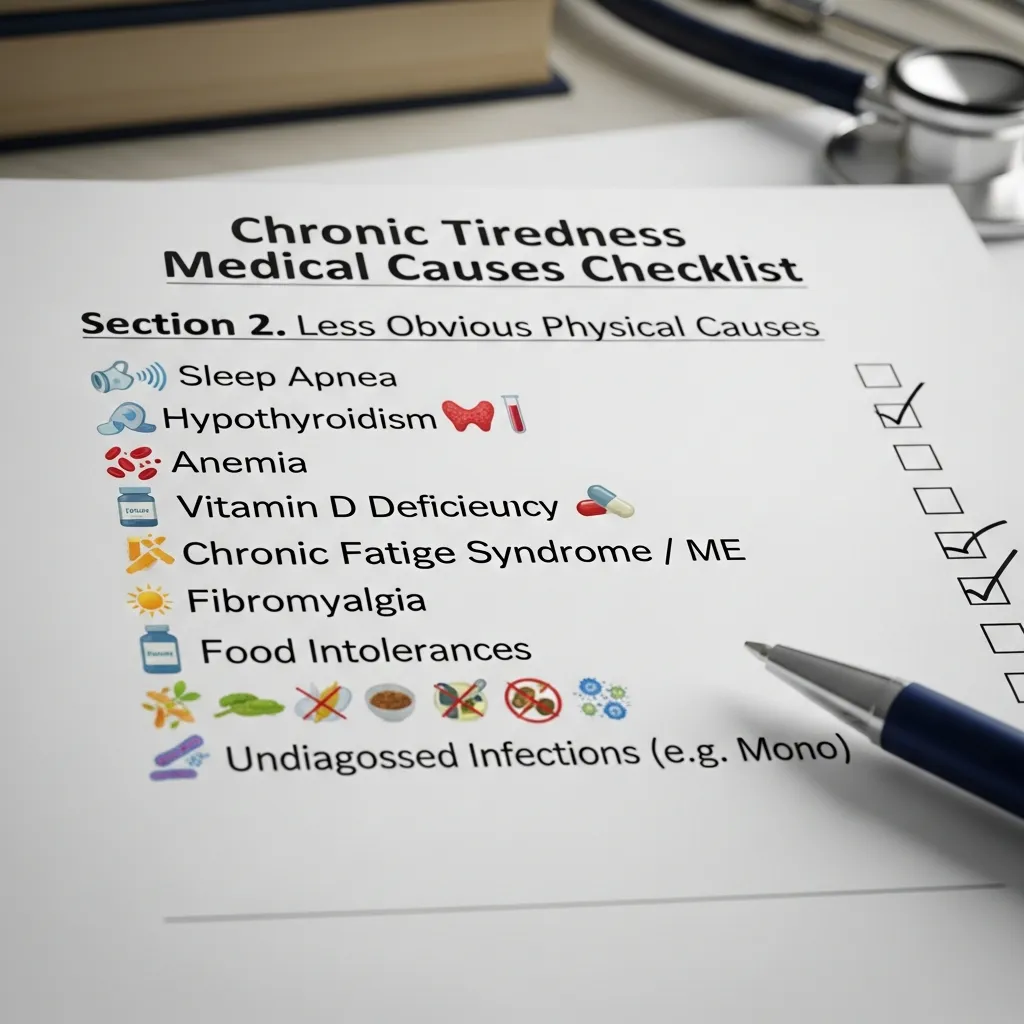 If routine blood work and heart evaluations come back normal, it is time to look deeper. The second section of the chronic tiredness medical causes checklist explores conditions that are harder to detect but equally exhausting and important in understanding persistent fatigue causes.
Kidney and Liver Disease
Your kidneys and liver act as your body’s primary filtration and detoxification systems. The kidneys filter waste from the blood to produce urine, while the liver breaks down toxins and aids in digestion.
When these organs begin to fail, waste products and toxins build up rapidly in the bloodstream. This accumulation effectively poisons the body from the inside, leading to a noticeable decline in energy, poor appetite, and general malaise. According to the National Institute of Diabetes and Digestive and Kidney Diseases, fatigue is one of the earliest and most prominent warning signs of kidney dysfunction.
The “Chronic Tiredness Medical Causes Checklist” – Section 3: Mental and Lifestyle Factors with Medical Overlap
 Physical ailments are not the only medical reasons for profound exhaustion. Mental health and chronic stress cause physiological changes in the body that severely impact your energy reserves and overall daily functioning.
Depression and Anxiety
Mental health conditions exert a heavy physical toll. Depression is closely linked with extreme fatigue, lack of motivation, sleep disturbances, and psychomotor retardation, where both physical movements and thought processes slow down significantly.
Anxiety creates a constant state of hyperarousal. When you are chronically anxious, your nervous system remains stuck in a “fight or flight” response. This ongoing internal pressure continuously burns through physical energy reserves, leaving you mentally drained and physically exhausted by the end of the day. Over time, this cycle of poor mental health and fatigue becomes self-reinforcing, making it harder to break free or seek timely help.
Stress and Burnout
Enduring high levels of stress for long periods leads to burnout, a state of emotional, physical, and mental exhaustion. While medical terminology around conditions like “adrenal fatigue” is debated, the real-world experience of burnout is widely recognized and clinically significant.
Chronic stress disrupts hormone balance, particularly cortisol regulation. Over time, the body struggles to maintain this hormonal demand, leading to poor sleep quality, weakened immune response, difficulty concentrating, and persistent low energy. These effects make it clear why psychological health must be included in any chronic tiredness medical causes checklist.
Taking Action Against Persistent Fatigue
Experiencing unrelenting exhaustion is not a personal weakness, nor is it something to ignore or normalize. As highlighted in a chronic tiredness medical causes checklist, fatigue can stem from multiple overlapping causes including nutritional deficiencies, thyroid disorders, sleep conditions, autoimmune diseases, chronic stress, and mental health challenges.
Because of this complexity, self-diagnosis is often not enough. It is important to track symptoms carefully and seek professional evaluation when fatigue persists. Sharing detailed information with your healthcare provider—such as symptom duration, severity, daily impact, and associated physical or emotional changes—can significantly improve diagnostic accuracy.
By taking a proactive approach, following a structured chronic tiredness medical causes checklist, and undergoing appropriate medical testing, individuals can identify the root causes of exhaustion and begin a targeted treatment plan. This not only improves energy levels but also restores focus, productivity, and overall quality of life.